Showing posts with label Earth. Show all posts

Tuesday, November 17, 2015

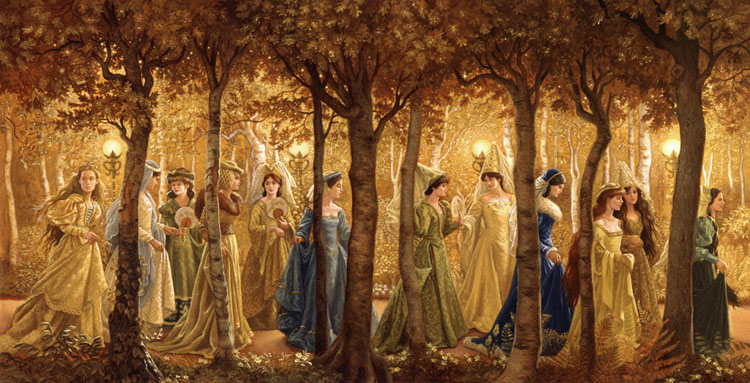
Alright, so the sausage was a big hit with the class. I also found it a little odd and unnerving and really strange as a pair with a sausage, bird, and mouse working together in their home. However the story that left a big impression on me somehow was “The Shoes that were Danced to Pieces” because it was so dark, and the princesses were so very rude. They were literally murdering these princes and then laughing about it! Moral: don't do what your not supposed to because in the end you'll get caught. That is all fine and dandy, but what about all those decapitated heads that those princesses didn't care about enough to save. I mean I guess the princes should have stopped doing it after the first few failures but what can you do? I mean another prince always needs to go slay the dragon for the princess…..but really this story was just like a cold hearted massacre.


The other story that stood out to me was, of course, “The Juniper Tree” which had all the delicious makings of a great story (I'm so sorry). I think the concepts of reality is off so much in this story. The boy is eaten….but comes back to life. The boy's head is cut off with the apple box…stepmom wraps it in cloth back on the neck and it magically stays? Boy turns into bird….and can carry limestone. I understand that this is a magical fairytale but please have at least a few concepts that are realistic. However, I did love how the stepmom goes bonkers at the end and then just gets crushed with a limestone slab that is dropped by Bird Boy Superman. I like the justice behind it, but also what is up with the family (it's like they don't even care she's dead) I know she is terrible and all….but ouch, no mourning.


Sunday, November 15, 2015

Were Not in Kansas Anymore

The stories this week are definitely not like the familiar fairy tales of last week. These stories were dark and seemed to lack a lesson for kids. I’ve never heard of any these stories or any derivative of them. I struggled to see how they fit in with the tales that have stayed popular to this day. The others seem to have purpose, but these just seem to tales or legends with no real point. After reading them all, I saw that they are a lot of similar elements and stock characters. We have evil step-mothers, beautiful ladies and princesses, infertile couples, magic and lots of strangeness. I found some humor in the strangeness, like the sausage that can cook and apparently walk or something. I also thought the it was humorous how the King in “The Shoes that were Danced to Pieces” didn’t know where his daughters were going at night and instead of watching over them himself he had to bribe young men with the chance of marrying one of the girls to do it.
Although there weren’t any obvious lessons in some of the stories, there was definitely common theme of good beating out evil. What I got from the tales was that as long as you’re a kind person and you put your faith in God, everything will work out for you in the end. And justice will be served to the evil people. It’s unclear to me if these stories are supposed to be religious because they have a lot of magical and impossible things happening in them, but I guess it is the magic of God perhaps.

The two extra stories I read were “The Girl with No Hands” and “The Three Little Men in the Woods.” These story were similar to all the rest and I found none of it really surprising. There was an evil jealous step-mother and a beautiful, kind girls and one who magically grows her cut off hands back. Oh and of course in both stories the beautiful girls face hardships, but end up living happily ever after married to a king. 

There Once Was a ______ Who Was ________

Reading fairytales in this class has been such a treat. Yes, because they're much easier to swallow than Kors and Peters, sure, but also because none of them are what they seem. I've always (well, at least since I've been in school) known that they are far from innocent tales and that they typically have dark and twisted morals, but I never realized just quite how dark they truly are. The first batch of readings were mostly fairytales that I've heard of before and they only had a few bits of variation to them, but out of this group of assigned tales, I've never heard of any of them before. Contrary to the majority of people, I didn't really grow up on fairytales. My favorite books when I was younger were the watered down classics for kids, the Little House on the Prairie books and odd things like The Magic Treehouse and Secrets of Droon series. When I was even younger, I liked things like Eric Carle and love the Very Hungry Caterpillar and Papa, Please Get The Moon for Me (which is why I chose The Moon as one of my picks)

But besides the hidden innuendos, dark themes and double-meanings, the aspect of these tales that I can really appreciate are the patterns. Dr. Sandona talked about fairytales during his portion of the Approaches to Literature class when he discussed structuralism, and now that I can get past the organization and categorizing that broke the rules of Literature and drove me nuts from this school of theory, I absolutely understand what he was saying: there is only one story.


 While I hate the thought that every story can be traced back to a few different patterns, I will admit that the majority of stories and tales can be predicted to end a certain way. Once in a while, we'll get that jaw-dropping surprise ending, but after you've read enough books, you can pretty much guess the ending. With fairytales, this seems to always be the case. Maybe we didn't know that this stepmother was going to decapitate her son and let his head roll into a trunk of apples, but we knew that she didn't like him and that her jealous and disgust wasn't going to lead this boy into a happy ending.


There are distinct patterns in all of these stories, and while not all of them follow one specific pattern, there are a good two or three that we can categorize together into groups of similar stories. For example, The Three Snake Leaves, The Riddle and The Shoes That Were Danced to Pieces are three different tales that all have similar patterns. In each of these, there is one princess, or twelve princesses, who each have some sort of quirk, but the king promises that if a prince can solve this quirk or is willing to accept it, he will be able to marry the princess, and if not, he will die. It's also interesting to note that all of these princesses are beautiful. The only quality they are ever given is beauty and the only reason a prince caves to follow her's or the king's orders is because she has such great beauty. In fact, beauty seems to be their only redeeming quality. The princess in The Three Snake Leaves, grows out of love with the prince, lusts after another man and kills the prince even after he has managed to revive her life and was willing to be buried alive with her. In The Riddle, the princess doesn't know the value of all the men who have lost their lives and thinks it's laughable that they are killed if she solves their puzzle. Even when she doesn't have the answer, she will not accept defeat and take the man as her betrothed, she lies and cheats to get the answer with the hopes that this prince will die too. And the twelve princesses are so vain and self-composed that they (except the youngest) never think it would be possible for a prince to outsmart them.


In a way, this pattern can be seen as empowering because these women all believe they can outsmart men and have their own plans. However, it always takes a turn for the worst because man trumps woman each time and the princess ends up punished or married. In fact, in all of these fairytales, once a woman is beyond the age of a little girl like Gretel, she is seen as manipulative, with high orders demanded of men and selfish or she's a downright evil stepmother/mother or a witch! The only innocent females are ones who can be classified as children and anyone who is older is never as intelligent, witty or resourceful as a man. It's sad that while it appears innocent on the surface, there are certainly misogynistic undertones in fairytales. We've always known the damsel in distress pattern, but even when that is not the case on the surface, women seem to always be getting themselves into trouble, or at least, that is how it is presented. Fairytales have never quite been for children, but it's children who read them and have lessons ingrained in them from the start whether they know it or not, and it's only when we've grown out of innocence ourselves that we can see what we read as children wasn't quite as innocent as we'd thought. There is absolute comfort in a pattern and that's why we're soothed by fairytales and tell them to our children, but what are we really teaching them?


Monday, November 9, 2015

I Melt With You

I found Shakespeare's The Tempest quite enjoyable on the whole, though I breathed a sigh of relief as I concluded its final acts, because my brain can only handle so much. 
I about died laughing when in act 4.1, line 15 on, Prospero basically warns Ferdinand in typical, protective, fatherly fashion to WAIT TIL MARRIAGE OR ELSE, in his own magical, somewhat threatening, words. 
I found the appearance of the spirits, Iris, Ceres, Juno, etc. lovely, especially as a person with an affinity for the myths, gods, and goddesses of the classical era. Classical references like this were common in the Renaissance, and in this case was used by Shakespeare to reinforce the beauty of the marriage-celebration scene. It was nice and sparkly, and the inclusion of those classical references only heightened the loveliness it evoked. 
Juno and Iris appear in the above picture. ~fancy~
In act 4, scene 1, lines 163-175, Prospero gives a wonderful speech:
You do look, my son, in a moved sort,
As if you were dismayed. Be cheerful, sir.
Our revels now are ended. These our actors,
As I foretold you, were all spirits and
Are melted into air, into thin air.
And like the baseless fabric of this vision,
The cloud-capped towers, the gorgeous palaces,
The solemn temples, the great globe itself—
Yea, all which it inherit—shall dissolve,
And like this insubstantial pageant faded,
Leave not a rack behind. We are such stuff
As dreams are made on, and our little life
Is rounded with a sleep. 


As I read this passage, I am overcome with thoughts of actors and the world of theater. Since this play was apparently Shakespeare's last, I wonder if this speech is not just Prospero's voice, but Will's too, acknowledging the conclusion of a play as Prospero acknowledges the end of his magical charms. At the beginning of the speech, when Prospero speaks to Ferdinand, telling him to cheer up after the abrupt end to the masque, I felt that I could resonate with Ferdinand's feelings; for instance, sometimes when I am deep in thought, perhaps listening to music, playing a videogame, or deep in a book, and am suddenly yanked out of my glorious fantasy world, I feel some disillusionment and dismay. I feel similarly when I see a play or movie, and walk back out into the harsh glare of the real world. The fantasies that are evoked within that experience are then "melted into thin air... and like this insubstantial pageant faded, leave not a rack behind." When the play ends, the actors pack up their props and go home. The sets are deconstructed and put away. The audience returns to the tedium of daily life. Prospero's spirits "dissolved" just as every experience in visual/sensory media does after we SAVE and QUIT, or turn OFF. This speech, as I read it, also caused me to have an existential crisis - I sat in front of my book wide-eyed, frozen at the thought that we all eventually "melt into thin air," "dissolve," and leave nothing behind.

Same.
Crises aside, I thoroughly enjoyed the play. I really appreciate how much I was actually able to understand it, allowing it to make me laugh, or cower in fear as I contemplated my eventual "dissolving."
How cool is this though?

Tuesday, November 3, 2015

The Tempest aka Hilarious

I really love Shakespeare, and the Tempest is one of his plays that has always caught my attention because it is such a different style, and scholars debate on what genre it falls into (already it sounds fascinating). Is it a romance or a comedy?....let's be honest, it's a rom com.

I was of course extremely interested in the relationship between the magical beings in the play, Prospero and Ariel. So Prospero rescues Arial from a witch (whoa witchcraft) and then also begins to use Ariel as he pleases. Was he even rescued? I feel like he was enslaved and then enslaved again, he really was never free. But also I think that is another point of the play. The characters really have no freedom: one being trapped on an uncivilized island, and two having Prospero as the leader of all things. It's really interesting seeing the monarchy between four people, until of course, the other shipwrecked chaps are involved.

Speaking of the shipwrecked chaps. I really love Trinculo and Stephano especially because I'm a sucker for comedic relief characters. However, when they both stumble across Caliban and think he is a mutant fish and and a monster it is really dumb, but hilarious. Their innocent and unplaced humor is still funny even in this time because of its ridiculousness. They both mostly think of profit (money) and drink which is something related to civilization. They go as far as to give the native Caliban some booze and he starts calling them gods! The whole situation is weird but I really like the corruption of nature (Caliban) with the poison of civilization (liquor).

 Trinculo (left), Stephano, and Caliban from Tempest (2010)
Also the movie was okay, but also now I sometimes confuse Prospero as a woman it's a problem.

Monday, October 5, 2015

There is definitely milk coming out of her axe!

Yet another adventure delving into "why women are more applicable to devil worshipping". However this is not anything new and it was already said that women were frivolous and sinful, like they were beacons of evil. "For every one man burnt for witchcraft, there are ten women burnt...women are more likely than men to be witches because of their instability of spirit, because they are understood better than demons, and because of their talkativeness" (238). That is good old William of Paris' reasoning: totally invalid. How did he even come up with such a riveting and evidence supported argument! He must have staged a competition between men and women and their ability to hold a conversation with demons....? Lame, this guy was lame. Yet, I did like the hilarious "witch milking an axe-handle".

(Any way you look at it, that's weird. Also pg 254)

It was a clever concept that the witches were not actually flying, but were imagining it. It is more realistic that the confused women believed they were flying and were actually being deceived by the devil. Except those cases where the devil actually allowed them to fly? I don't know, things get weird. I also like that during this time it wasn't just "Oh witch. Okay, execute." It moved onto "Oh witch. Okay, confess and repent. Give us some names. You will live but be punished/shamed." There was that new leeway that if the accused admitted to the crime they could be spared. Whoa, humanism. Moving up in the world.
(This is a pic of Johann Geiler Von Kaysersberg at the end of his life, also he died in 1510 two years after the Die Emeis, so accurate depiction of his striking good looks and wrinkles for days, he looks rude so I needed this here.)

Woe is me!

             At this point I think we have read just about everything there is to know about witchcraft, what stood out to me in this week’s reading was the writings of Johann Geiler von Kaysersberg. I thought it was extremely interesting how he reasoned that witchcraft was not actually being done by the witch him or herself, but by the devil. The witches are simply just gesturing or signaling the devil to do something. To me this is the most logical explanation of witchcraft we’ve read yet, of course logical for the time period and for believing in the existence of the devil. He also explains that witches aren’t really traveling at night, but simply dreaming. He says that the devil can get into the minds of people create impressions. I think Kaysersberg was a pretty smart guy for recognizing that people don’t actually have magical powers. If more people at this time had these same beliefs we maybe would have seen a different treatment of witches. Gianfrancesco Pico della Mirandola’s Strix was fun read to me. It seemed like a very simplistic play and the short, basic dialogue was entertaining. I especially liked how Apistius changes his mind almost instantly and then declares that he has been convinced.

                I really loved the illustrations in this chapter. It’s fascinating to me to see all the interpretations what witches were. The pictures are so detailed and some really tell a story on their own. While the illustrations depict witches doing different things they also showed how they were similar ideas of witches coming from different artists. 

Sunday, October 4, 2015

Witchy Shenanigans

I found chapter 7 of Kors/Peters to take a somewhat more refreshing turn compared to the repetitive, graphic rhetoric of previous chapters (butts and baby-eating) that we've been assigned.  
I really liked Desiderius Erasmus' story on the sorcerer from Orléans, especially in his concluding paragraphs in which he blames the horror of witchcraft directly on the weaknesses of humanity - in this case, greed. He doesn't even refer to the devil at this point, nope. He isn't making excuses for how susceptible humans are to temptation. Additionally, his frankness is extremely refreshing and actually made me chuckle; this is just a man who is freaking tired of witchy shenanigans. He states, "Monstrosities of this sort are of such frequent occurrence everywhere in the Digest that now that I am accustomed to them they do not even amuse me any longer, much less annoy me" (236). Erasmus is just sick of everyone's shit and boy can I appreciate that.


Same.
I also enjoyed Johann Geiler von Kaysersberg's richly detailed descriptions on witches' perceived travel movements, like how witches might think that they are flying through space but are just imagining it because of our crafty pal Satan. Kaysersberg's assertions therefore take the power away from witches (and perhaps subsequently some of the blame) and placing it in the hands of the devil. I was quite content reading until I reached the misogynistic part on why women are more likely to become witches and I had stress-induced flashbacks to the Malleus. I was brought back to reality when I read his concluding sentence: "But those [sorcerers] who can be cured and made healthy ought not to be put to death, but to a lesser punishment" (239), which was a lovely reminder not to get sucked into believing in the stereotype of the ignorant, dangerously uncompromising witch-hunting mob.

So not this. Hopefully. Or at least less of this.
Gianfrancesco Pico della Mirandola's Strix was fun and interesting because of its format as dialogue. Everyone appreciates a good basic play, right? Sure the story was somewhat contrived, especially with the staunch skeptic Apistius completely renouncing his skepticism on believing in witchcraft after interacting with the witch, but Pico's point was clear. Apistius, seeing the evidence, accepts that witchcraft exists. I appreciated  the implications here: that an accusation must be founded and have evidence. It seems to have connections to the movement of Christian Humanism during the Renaissance; that beliefs must be founded on reason and human experience. Neat.
Finally, while reading Pope Hadrian's On Diabolical Witchcraft, I had but one thought: Holy long sentences, Batman! Seriously. What is it with Popes and long sentences?

Witches, witches in a glitch, how many wishes do you wish?

Chapter seven covers a lot of ground and material, but what is most intriguing has to be the amount of people involved in the world of witchcraft. We know that the main focus is the witches themselves, but it's also important to take into account the Devil, God, Heretics, Believers v. Non-Believers, Humanists, Sorcerers, Preachers, Popes and countless other people who deem themselves experts at particular types of magic or careers, etc. One of the few people who stood out to me in the portion of this reading was Johann Geiler von Kayserberg, a theologian and a preacher. When I used to hear the word preacher, I pictured some sort of head of church preaching to the congregation about what lessons or perils could be learned from a particular sermon or verse and practically yelling and using repetition to drill that moral or rule into each and every mind of the congregation.

But now after just a few weeks in this class, I can see that it isn't always necessarily a religious preacher. It's more a very opinionated person who has decided to put out their own soap box, jump up on it and rant and rave about a topic to anyone who will listen. The topic of favor? Witchcraft, of course. I'd like to think of Kayserberg as that commenter on youtube under a music video that says "So and so sucks, and here's why" before listing reason after reason for why he dislikes this artist and those reasons would probably not be related to the artist's song, style or talent at all. And just like how one nasty comment can open up into a heated screaming match between commenters, preachers like Kayserberg are the start or continuation of presenting an opinion, receiving people who both agree and disagree with them and then spiraling completely out of control.


But although the preaching might need to come to a halt, Kayserburg brings up some fine points about witches: particularly, that witches aren't quite as powerful as we thought that they were. I was imagining these people (can I use the term "apparating"?) from one place to another in the blink of an eye or suddenly making objects appear or disappear. However, it doesn't quite work like that. These witches have the tools to travel at night, sure, or to make things appear and disappear, but it's as if everything they attempt to do has to go through the devil or be done by the devil himself. It's as if the devil is the ringmaster of this circus known as witchcraft.

When I imagine these night travels, I pictured witches flying through the air on brooms or just by themselves floating through the night among the stars. But this isn't the case. Sure, witches can travel at night, but it's more a movement of the soul and the mind out of the body and into another realm or part of the world without actually moving. Like Kayserburg's story about the woman on the bench, she is showing her night traveling, but her body is only spasming until she falls. Maybe she only thinks she is traveling or maybe she has traveled without her body, but it isn't the magical flight we typically picture.

Kayserburg also takes the time to show several examples of the devil doing the witches' work. A witch has the tools to do as she pleases and summon or erase what she wants, but although she possesses the power to ask for these things to be done, she is not capable of doing so herself. The devil gets almost a sort of notification through these spells and incantations and then he carries out the deed. It fascinates me that people are so scared of witches and all the powers they have, but in the end, they aren't even the ones who are doing the magic! We know witches are conjuring the devil and serving him, but why is the focus on burning witches when it could be using this connection with the devil to get closer to him and weaken him? Why not go to the source of evil instead of his servants and minions? We talk about witches endlessly, and they might have some tricks up their sleeves, but they are nothing without the devil.


Monday, September 21, 2015

Is it hot in here? Or is it just me....

In order to enter "the sect of the damned" one must "kiss this [toad] creature on the hind quarters and some on the mouth; they receive the tongue and saliva of the beast inside their mouths (KP 115)." But then the "novice" must kiss a wasted black eyed man from which "catholic faith totally disappears from his heart (KP 115)." No, but this is not all then they have to kiss the butt of a cat statue and say how unworthy they are and then have a giant orgy with no discrimination, because you know, devil worshipers. I just need to say how ridiculous this is,I know all of these rituals have been pretty bizarre so far but this one has definitely taken the lead. It is so very weirdly detailed and it makes me once again question how this Pope Gregory IX got his info. Was it secondhand? Thus, can it be true that this happened? Or was he like peeping in on these devil worshipers' orgies like "whoa that's cray! I'm totally writing this down in my journal."
                                      
                                     
  (Super creepy painting look at those weird creatures. James and Hermogenes. Musee Valenciennes)

Also everything was out of proportion. The poor servant, Alice Kyteler, was executed for sorcery because of a family dispute on land distribution (KP 121). People were just dropping demons and sorcery around to get their way. So selfish, what a terrible lot of people. Remember kids, if your getting bullied just tell a higher authority that they are practicing witchcraft and you can watch your bullies get roasted on a stick. Wow, what a win win. 


I was also horrified at the thought of women eating their own children. It was said that they kill them and sometimes ( if not their own child) place them back into their beds like it was an accident. Or that they boil them and grind them and like put the goo on their skin or drink it ( KP 157). It makes my stomach churn, I hope this really didn't happen and that it was just an exaggeration gone wrong. And of course if I was in the wife's position and (probably actually innocent) was being burned at the stake I would also be cursing all of those guys too. I understand the giant age gap and the hysteria with devil worshiping, yeah it's scary, but also just because a woman is cursing you while she is being tortured and burned at the stake does not mean you made the right decision, sorry bro. I do not worship the devil and I would still curse someone to hell if I was being burned alive, just saying.

Sorcery: The Uncanny


Chapters 4 and 5 in Kors/Peters have certainly taken a sharp turn from the jovial, upbeat magic portrayed in Sir Gawain and the Green Knight to graphic, brutal descriptions of terrifying sorcery. A headless, living green man seemed like child's play compared to stories of cannibalism and boiling dead infants for sustenance. I noted extreme specificity in these two chapters in the discussions and denunciations of magical rituals by religious authorities. Additionally, in these chapters, sorcery became completely aligned with heresy.

In these chapters, magic became even more so the enemy of Christianity: sorcerers were the heretical agents of Satan, and magic was their tool for evil - quite the departure from its benign household use as compiled in the Wolfsthurn handbook many reading assignments ago.

Early on in chapter 4, while reading Pope Alexander IV's "Sorcery and the Inquisitors,” I was pleasantly surprised when he advised “inquisitors of heretical depravity” not to investigate magical activities unless there was proof of heretical activity. I perhaps shouldn’t be surprised that he advised people to simply do their job, but with the occasional stereotypical thought of witch-hunting mobs clouding my judgment as I read, I appreciated the Pope’s progressive attitude. On the other hand, his letter effectually opens up sorcery to inquisition, and I am sure there were cases of inquisitors bending this decree for their own purposes. I, perhaps naively, would like to think that this letter was the Pope’s way of preventing these inquisitors from disturbing benign magicians.  

Hopefully Pope Alexander's letter prevented things like this.
Immediately following Pope Alexander's letter, though, are letters from William, Cardinal of Santa Sabina and Pope John XXII on Sorcery and the Inquisitors. These completely oppose Pope Alexander's viewpoints. The Cardinal, for instance, calls sorcerers "infectors of God's flock" (119) and Pope John states that "they ally themselves with death and make a pact with hell. By their means a post pestilential disease... grievously infects infests the flock of Christ throughout the world" (120). Granted, Pope John is speaking from a place of fear, as sorcerers have made an attempt on his life, which is completely understandable. As Pope, these letters had extreme influence and likely reaffirmed the Christian, God-fearing public's anxieties about the malevolent power and potential of magic. 

Perhaps the most memorable reading was Bernardino of Siena's sermon against women sorcerers. He must have been an extremely effective preacher through his fear-mongering, emotionally appealing language. He speaks directly to his audience in an accusatory tone, telling them YOU have committed this sin, YOU have caused this suffering, YOU will then suffer in eternal torment. What a way to terrify his congregation into denouncing any kind of magic for fear of their eternal destiny. Part of me, now, doesn't blame the paranoia that ensued in Salem in the late 1600s. 

Chapter 5 just built on the terrifying heresy established in the the previous chapter, with anecdotes of infanticide and cannibalism. My notes literally read "~evil witchy anecdotes~" and "~bad things~" because some of the stories were so disturbingly graphic.  My favorite one was The Errores Gazariorum because of its description of the process of a person's seduction to the dark side.

I had to do it.
It is specific, backwards, perverse, etc. It is the opposite of normalcy for a typical Christian. It is the inverse, the uncanny - and it makes it all the more terrifying. Again, the fears of average folk at this time was completely understandable. They were molded by their religious leaders and knew little else. How sad. :(


Sunday, September 20, 2015

Witches...They're Magically Devil-icious

When I think of a witch, my mind immediately goes to an older woman with a foul expression and ugly features cackling over a bubbling, boiling cauldron brewing some sort of potion to wreak havoc on the innocent. While the chapter on Diabolical Witches doesn't quite break down what a witch supposedly looked like or draw one out, it does seem to do a pretty good attempt at slashing witch stereotypes and putting things right. But it's a mass collection of opinions and contradictions.

So far, I have really appreciated and been intrigued by all of our readings, but for some reason, I was immensely frustrated by it. Finally, I know why. It's all opinion. It lacks evidence. My Type-A brain wants one person with qualifications to write one book about all there is to know about witches and witchcraft and for that to be the be-all end-all source of information. But that's not the point of witchcraft, is it? After some resistance, I have come to embrace the variety of information coming to us through these different excerpts from various scholars and authors. It's a sort of organized chaos that allows us to wipe the slate clean and forget what we know. We absorb new things about witchcraft page by page, chapter by chapter, and eventually, a new vision of a witch starts to form in our heads. We begin to agree and disagree with these writers and create our own image. Without even meaning to we accredit and ignore certain writers and therefore the habits, customs and descriptions of witches.

What intrigues me most is the incorporation of the Devil. The exercise earlier in the semester about what the word "magic"makes us feel showed that we don't necessarily always get a negative connotation of the word. Many of us had fond memories of the magic of Harry Potter or fairies and wands and dreams coming true. In that sense, it made me think that there were both good and bad witches even if they looked different from modern interpretations. The "bad", darker witches I pictured were just witches who had chosen the wrong path or gone astray. I thought that they were witches who used their powers for evil instead of good and wanted to wrong people. However, these witches we read about were not necessarily doing "bad" things. Curing illnesses and injuries and changing the weather don't seem like evil. And while making someone fall in love with you might be manipulative and uncalled for, it's not something we'd put at the top of our charts as an evil act. It's simply that witchcraft is unnatural and that's what makes these witches so terrible. What gives these people the right to think of themselves as better than the rest of humanity?

This chapter reminded me of The Uberman theory that comes up in Dostoyevsky's Crime and Punishment. The main character, Raskolnikov, basically believes himself to be an Uberman, or a human being who is superior to other human beings. Because of his high intelligence and intellect, he believes that any crime he commits should be pardoned because anything he does is for the greater good and his intelligence should excuse him from the law and unethical wrongdoings. It seems that this is what witchcraft is. Anything a witch does should be seen as fine because only they have the power to do so. Do not be mad that a witch has carried out the deeds of the devil, because only she could have done that and not you. But the frustration that comes with this is that by worshipping and doing deeds for the devil, these witches thing of themselves as almighty beings who can have the powers of god. They do not respect or worship God. They are not in awe of him. They live to serve the devil. They will do anything for the devil no matter how cruel, crude or forbidden. People cannot understand how these witches will do anything to please the devil when the devil is the nemesis of god and abuses his powers.

Witches explained in this chapter are servants of the devil and work to compete against god when they do the devil's work. Though the actions they perform might be innocent alone, they add up in a plot to fight against good and work towards evil. They aid the devil and work to please him, ignoring all they had known about heavenly aspirations and religion. Is it witchcraft that is so bad or is it that fact that these witches worship the devil? I think these writings all exist because various groups of people and intellectual individuals cannot fathom how so many people could break from worshipping god and instead worship someone who had fallen from heaven's grasp into hell. The issue is not spells and potions, but serving the devil and doing everything they can to ignore religion and heaven and instead, be almighty themselves and pursue evil.

HELL TOUPEE!


For starters, I am so tempted to go on and on about the article I particularly focused on for my presentation on Monday (Bernardino of Siena), and how it reminds me of fear mongering Donald Trump, but I will save my comments for myself, and my opinions on the implication of the preacher’s words for class on Monday. 
i had to....

What I will focus on is the imagery of these passages we have been reading. Instinctively, these ideas and theories are laughable: how could humans think such things? But when I read what these passages are saying, they feel real (not in the sense that I think magic is real, but in the sense that I understand where these people are coming from). There is just so much detail. For example, in article 18, Pop Gregory IX is writing a letter about seeking out heretics. The modern mind would read this letter and think “how the hell can this be true,” but it reads so true to him. He dictates the events that are carried out: a novice is received, “a shape of a certain frog appears to him, which (BTW) some are accustomed to call a toad” (115). He continues to say that some kiss this toad on its mouth, others on its tushy… and I’m just like how can there be so many variations of this one ceremony if it isn’t true? In the same paragraph, Pope Greg (can I call you Greg) writes that once the frog (or toad, depending on which of the numerous ceremonies you are attending and who is in attendance) is kissed, the body of the novice grows cold and the “memory of the catholic faith totally disappears from his heart.” This stood out to me because it almost felt like he was there... all of these times...and was able to reference all the different type of people he saw there. Just a theory... 


I also thought it was interesting how little they trusted the faithful. This can go either way for me. On one end, these people are worried that the faithful may stray because they were once faithful and they have strayed (they being the preachers, popes, etc) or, on the other end, it is because they consider the faithful to be weak. Both options are a little bit sketchy to me. Especially since they consider their warnings of what magic leads to "charitable," as if they know what is to come. 


Overall, I think this whole thing from churches and theologians is deceptive and I wish there was like a diary I could read from these guys that exposed them on all their sneakiness... sort of like now, where our leaders emails get hacked and we get to know all the juicy, shitty stuff they did and lied to us about. 


Monday, August 31, 2015

Green Dreams Are Made of This….remix with The Corrupt Businessman


In a world where giant, green men with very large axes simply stroll into Arthurian courtyards during Michaelmas...but can you imagine if there was more than one Green Knight? That’s a bit scary. This is probably my third time reading this story and this part is probably my second favorite; since I am quite fond of the whole “an honorable end for an honorable man,” so I like the weird ending. But this part always sticks out, because you know, decapitation. Yet even so “that scalp and skull now swung from his fist/…and it opened its eyelids, stared straight ahead/ and spoke this speech…” (SGGK 49). The supernatural way that he simply addresses the court like some headless horseman makes the story really come to life (no pun intended). 


Image result for emerald ring
However one of the most important questions to ask is: Why green? Why not a Blue Knight? Why are this Knight and his horse cantering into the great hall sporting this secondary color? The most common symbol for green is envy and jealousy so would that mean that this mysterious Green Knight is jealous of King Arthur, his court, his followers? So many questions, so little time. The first lines that tell of this unusual pigment in his skin: “Amazement seized their minds/ no soul had ever seen/ a knight of such a kind/ entirely emerald green.” (SGGK 30). There is an intended emphasis on “emerald” since it creates alliteration with “entirely” and with this the knight is put into a noble light since emeralds are jewels which would NOT be associated with a lower born person or even a small-fry knight. My guess is that this honorable green knight heard about all the brave deeds and heroic knights and their love of their king, he got real envious because he lives alone and forgotten in the corner of the world and he comes to the court because he wants to be noticed and talked about like the famous king. 


Image result for alchemy
Also I feel like I should also talk about the other reading we had, “The Canon’s Assistant Tale” which was interesting in how terrible the people in it are. Especially the part where the “rascal canon” swindles a priest with his false alchemy. First of all that priest is way too gullible and a bit corrupt if he is all about making illegal money, probably for himself. And then the swindler, well, I have mixed feelings about him since he is obviously talented about his work and is renown through the town, but also he is a fraud. “That scoundrel canon, whom the devil fetch/ Out of his bosom took a seeming charcoal/ A bit of beech wherein he’d bored a hole/ In which he’d placed an ounce of silver filings…” (CAT 442). Obviously what the fraud canon is doing is horrible, and he is using alchemist pretexts to swindle wealthy, ignorant people who want to believe in magic, and a quick way to more money. Yet, in a way he is just trying to make money and survive, it is his livelihood, and he is good at it. Somehow I saw him more as a corrupt salesman.