Showing posts with label Emily Stencil. Show all posts

Monday, November 16, 2015

Viewer Discretion Advised


I have really enjoyed reading the Brother Grimm Fairy Tales this past week. I have always loved fairy tales, but adding these dark twists make me love them even more. I have always had a sick sense of humor so I love these violent acts that were added in. In The Juniper Tree when the stepmother cut up the boy’s body and put it in the stew, oh my god. And then the dad ate him! And said it was the best strew he had ever tasted! Wow, I really just love that. Like who would think to write that? Wow. That was great. And then in The Two Traveling Companions when the shoemaker cut out the tailor’s eyes! Why would anyone do that? “Oh I will give you food, but give me your eyes!” That does not help the tailor in any way. That is just sick. I think it added a good element to the story.

I do think these stories teach good lessons though, while still having brutal acts in them. In The Two Traveling Companions, people are being taught to always do good. Karma is a real thing. When the tailor helped out all of the animals, they all helped him out. When the shoe maker cut out the tailor’s eyes, abandoned him, and tried to hurt him, the shoemaker was the one who ended up dying of starvation. When you do the right thing, things go your way and end well; that is a great lesson for everyone to know. This lesson was shown in multiple other fairy tales like The Juniper Tree and The Three Snake Leaves.

I really enjoyed The Three Snake Leaves as well because of the romance. The prince was willing to be buried alive to show his love for the princess. And then he even brought her back to life! But then the story shows how girls are evil and don’t appreciate things boys do for them, and the princess cheated on him and had him murdered. But she could never get away with that. The loyal servant who was probably my favorite character, saved the prince’s life! He did not have to do that, he could have saved the snake leaves for himself, but he didn’t. I also loved that the King went against his own daughter because she was a terrible person. She deserved that. It was a good twist, even though it was a little less violent.

Monday, November 2, 2015

Curiosity

All I can say is Thank the Lord for Sparknotes. I have always struggled with comprehending and analyzing readings in modern day English, let alone older English. Sparknotes has been extremely helpful because next to the original text, they have the modern text, which makes it much easier to understand because when I got confused I could just slide my eyes over to the other side. The summaries at the end of each scene were also very helpful to conclude everything. I have not read many plays written by Shakespeare, only Romeo and Juliet and Macbeth. I did not enjoy Romeo and Juliet, but I did really like Macbeth so I am curious to see how I will feel about the Temptest.
Act I Scene I did not particularly interest me. Although it did remind me of Life with Pi just because it was about a ship during a storm. Though, this is the only similarity. I do think starting a story or play off with an action scene is a great way to get the reader’s attention though, just not for me personally.
Act I Scene II was much more interesting. I enjoyed hearing the different background stories. I still am a little confused about Prospero and his brother and the ship, but I am hoping after class, or as we continue to read that that will make more sense.
I have already learned to like Ariel and Miranda. I am not quite sure how I feel about Ferdinand though; I have not read enough in the play to know much about him. Prospero seems to be a cool wizard. I feel bad that he had an evil brother that usurped him.As for Caliban, I am not a fan. He does seem to have some evil in him. But why? I want to learn more about Ariel and Caliban and how they lived with the witch Sycorax. I am also looking forward to seeing how the love of Miranda and Ferdinand either blossoms or withers.
I am looking forward to read more and find out about the characters, even though it is a hard reading.

Monday, October 5, 2015

The Witchcraft Craze

Chapter 7 of Kors and Peters was definitely a breath of fresh air compared to the previous chapters about eating babies. By the end of the sixteenth century, there were many more skeptics of witches, and many more people were openly saying their view on witchcraft.

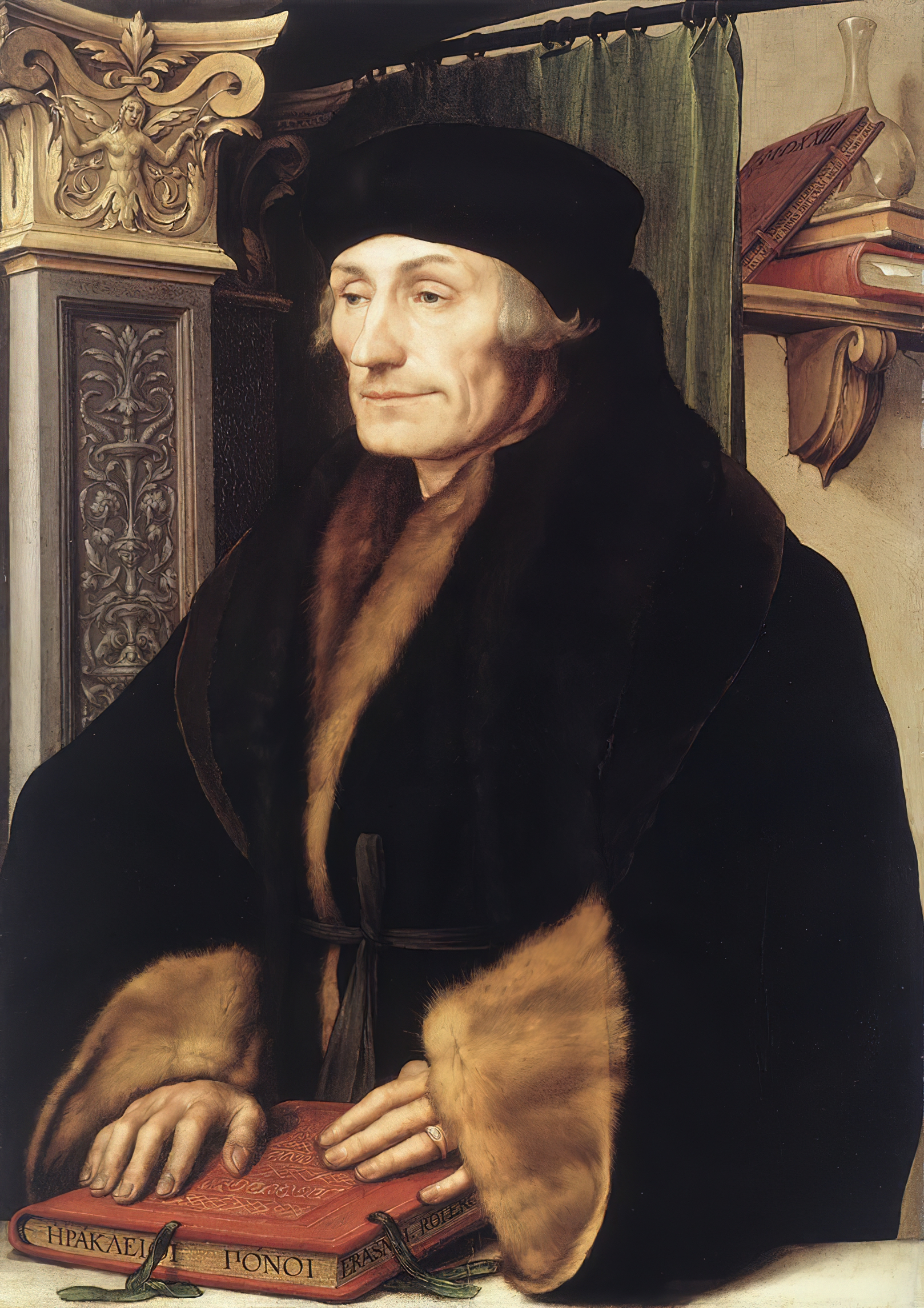
Desiderius Erasmus: A Terrible Case of Sorcerer in Orléans is a great way to start off the chapter because it introduces a different outlook on to the hype of witchcraft. Like Jennifer, I appreciate the story because Erramus is just tired of the witchcraft accusations and the drama involved. He blames witchcraft on the people: “we are guilty of crimes that far outdo either the giants, whom the thunderbolt confounded, or Lycaon’s cruelty, for which the great flood itself hardly atoned?” Then goes on to say “when each day, by fresh wickedness, we provoke the Lord out God…” We, the people, are wicked on our own, especially when greed comes into play. This brought a whole new way of looking at things before the reformation later in the sixteenth century. There were people during this time who were over the witchcraft craze, and Eramus backed them up so they were not alone in a world of witches.


Strix was interesting to me because it was written in a dialogue. Personally I think dialogues are more fun to read because it is easier to picture two people having a conversation in your head, therefore making the concepts easier to understand. Gianfrancesco Pico della Mirandola has Apistuis, Phronimus, Strega, and Dicaste explain the skepticism of witchcraft but how it does exist: Phronimus says “You have shown that the circles, ointments, magical words, travel through the air, sexua relations with demons all occur as often in our own time as in the remote past.” Apistuis is now convinced witchcraft is real, which many people this time did believe, so this excerpt shows a valid reason as to why the witchcraft craze went on for so long.

Sunday, September 20, 2015

Snitches or Witches?

When reading chapters 4 and 5, I immediately went back in time to my freshman seminar, Satan in Salem. In that class, we read many articles about the Salem witch trials. For our final project, we had to write a paper explaining why we thought the Salem witch trials happened. For my paper, I wrote about how it was all a joke. It started with 3 girls accusing their servant to be a witch. The servant, Tibula, played with voodoo, which led to her being a witch. The girls would then pretend to be possessed by Tibula and the devil. The people in charge of the court believed the girls and sent Tibula to jail for being a witch. This went on and on. Young girls would accuse older women and sometimes men as being witches, making all of those women and men go to jail for a long time, or even executed. This was all a joke to those girls. Although in that class I had never learned about witches eating babies going to orgies. Though I am not sure which came first, the witches in Salem and the witches in England were influenced from each other.


Kassy made a great point about how the people did not want to blame God for the miscarriages and low mortality rates. That is why the people blamed witches. Witches were associated with the devil; the devil does bad things; therefore the devil and witches were blamed for the bad things. She makes a good point when she says “After all, [God] was the being they feared, admired and worshiped to help guide them through the tough times.” God was so powerful that he could not be blamed for anything remotely bad.

I am very curious to know if the town truly believed these witch tales, if they thought their neighbors, or milk man, or even families, were witches. Maybe they did believe it, because they had no other explanation for these strange happenings. Or maybe they did not believe it, and only went along with it for their own personal entertainment. I would love to have dinner with someone from the 12th century to know how they felt about this; if they did truly believe in magic. There had to be some people that did not believe in the witch tales, but they went along with it because they were too scared to defend the witches. I mean if you defend a witch then obviously you are a witch too. 

Monday, August 31, 2015

The Headless Horseman

At first when Dr. MB told us about this excerpt, my initial thought was the Headless Horseman from Sleepy Hallow. I’ve only vaguely heard of the Headless Horseman from an episode of Scooby-Doo so I do not know much about the story line behind Sleepy Hallow, but that was the image I had engraved in my head. Then Dr. MB asked us what the color green meant. Instantly, I thought of the famous phrase “green with envy” and how in TV shows characters’ eyes would turn green when they were jealous. Going in to read this excerpt, I imagined a green, headless knight, filled with jealousy, galloping on a horse into the sunset. To my surprise, I was more correct than I thought I would have.


It amazed me at the end of the excerpt when the Green Knight rode off into the night carrying his head. The image I had before reading the poem was correct. Now, because I do not know the story of Sleepy Hallow, I do not know if these two characters are relatable in any other ways, but have some sort of connection. I believe my theory of the Green Knight being jealous is possible. The other meanings of green are renewal and rebirth which I do not think are the case for the giant. Many other students mentioned how the Green Knight was a giant, maybe meaning he was an outcast or misunderstood. If this is the case then is it possible he was jealous of King Author and the knights are the round table. Maybe he just wanted to get their attention with his ridiculous request? Any attention is good attention, right? Maybe the Green Knight wanted to scare the people of the round table to prove that he was better than them? The thoughts of the Green Knight are unknown, and there are many different theories of why he is the way he is.

My favorite element of the poem was the alliteration. I struggle with reading and understanding poems, and the alliteration rolls off of the tongue easily so it keeps me focused because of the rhythm. Line 182 mentioned his “bushy green beard growing down to his breast” which created great imagery for the Green Knight. The Green Knight is given a hulk-like description, but is still attractive as all knights are, but the bushy beard gives him a lumberjack-vibe, along with his giant green ax. Line 324 also has great alliteration: “and folly finds the man who flirts with the fool.” This line stuck out to me because 1. “folly” is a great word and needs to be used more often and 2. “flirts with the fool” is a great expression along with “flirting with the devil” and it shows how idiotic the Green Knight’s request is. The alliteration made a big impact on the poem and made it much more interesting to read.