Showing posts with label Team Dumbledore. Show all posts

Monday, October 5, 2015

The Witchcraft Craze

Chapter 7 of Kors and Peters was definitely a breath of fresh air compared to the previous chapters about eating babies. By the end of the sixteenth century, there were many more skeptics of witches, and many more people were openly saying their view on witchcraft.

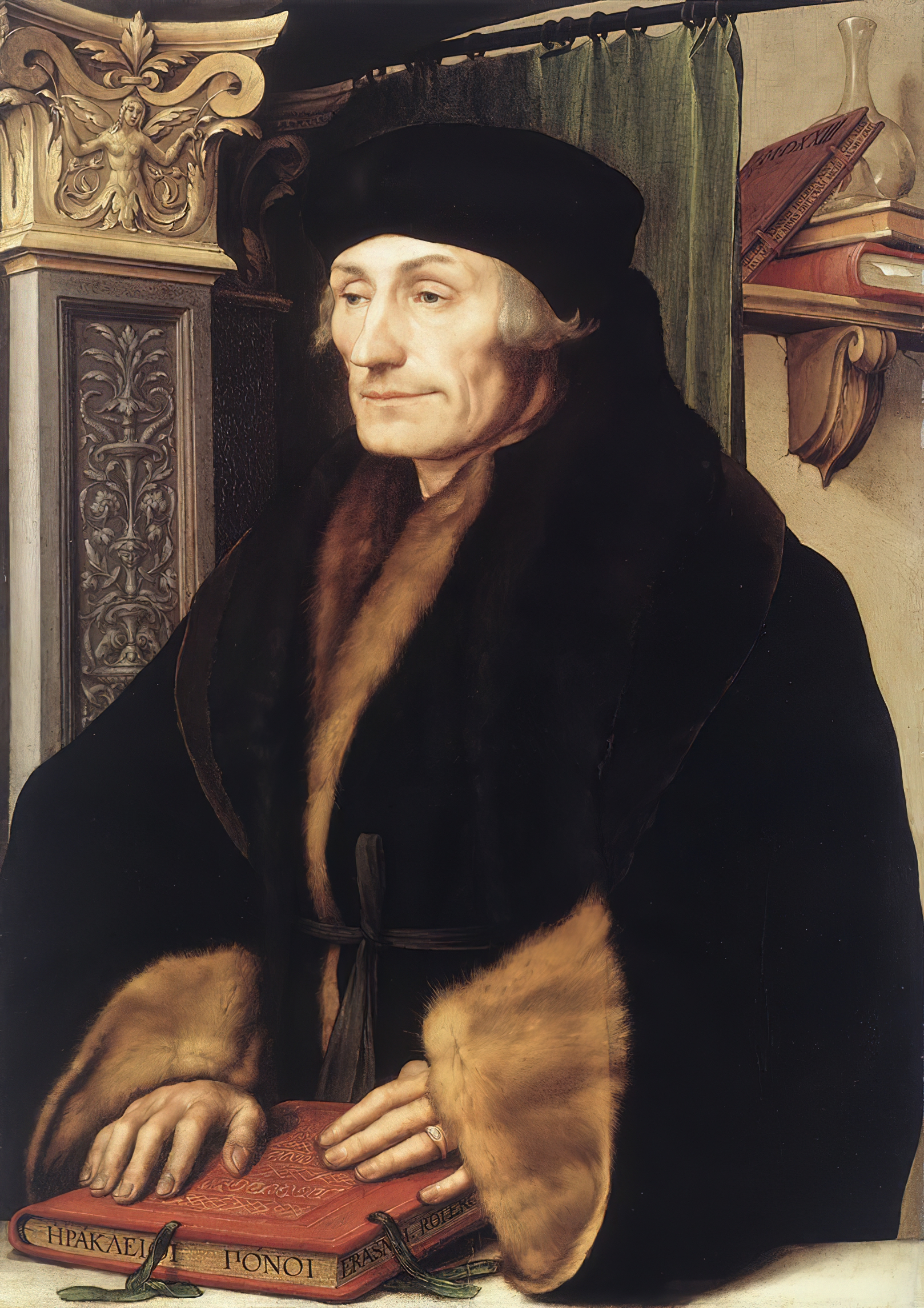
Desiderius Erasmus: A Terrible Case of Sorcerer in OrlĂ©ans is a great way to start off the chapter because it introduces a different outlook on to the hype of witchcraft. Like Jennifer, I appreciate the story because Erramus is just tired of the witchcraft accusations and the drama involved. He blames witchcraft on the people: “we are guilty of crimes that far outdo either the giants, whom the thunderbolt confounded, or Lycaon’s cruelty, for which the great flood itself hardly atoned?” Then goes on to say “when each day, by fresh wickedness, we provoke the Lord out God…” We, the people, are wicked on our own, especially when greed comes into play. This brought a whole new way of looking at things before the reformation later in the sixteenth century. There were people during this time who were over the witchcraft craze, and Eramus backed them up so they were not alone in a world of witches.


Strix was interesting to me because it was written in a dialogue. Personally I think dialogues are more fun to read because it is easier to picture two people having a conversation in your head, therefore making the concepts easier to understand. Gianfrancesco Pico della Mirandola has Apistuis, Phronimus, Strega, and Dicaste explain the skepticism of witchcraft but how it does exist: Phronimus says “You have shown that the circles, ointments, magical words, travel through the air, sexua relations with demons all occur as often in our own time as in the remote past.” Apistuis is now convinced witchcraft is real, which many people this time did believe, so this excerpt shows a valid reason as to why the witchcraft craze went on for so long.

Sunday, October 4, 2015

Witches, witches in a glitch, how many wishes do you wish?

Chapter seven covers a lot of ground and material, but what is most intriguing has to be the amount of people involved in the world of witchcraft. We know that the main focus is the witches themselves, but it's also important to take into account the Devil, God, Heretics, Believers v. Non-Believers, Humanists, Sorcerers, Preachers, Popes and countless other people who deem themselves experts at particular types of magic or careers, etc. One of the few people who stood out to me in the portion of this reading was Johann Geiler von Kayserberg, a theologian and a preacher. When I used to hear the word preacher, I pictured some sort of head of church preaching to the congregation about what lessons or perils could be learned from a particular sermon or verse and practically yelling and using repetition to drill that moral or rule into each and every mind of the congregation.

But now after just a few weeks in this class, I can see that it isn't always necessarily a religious preacher. It's more a very opinionated person who has decided to put out their own soap box, jump up on it and rant and rave about a topic to anyone who will listen. The topic of favor? Witchcraft, of course. I'd like to think of Kayserberg as that commenter on youtube under a music video that says "So and so sucks, and here's why" before listing reason after reason for why he dislikes this artist and those reasons would probably not be related to the artist's song, style or talent at all. And just like how one nasty comment can open up into a heated screaming match between commenters, preachers like Kayserberg are the start or continuation of presenting an opinion, receiving people who both agree and disagree with them and then spiraling completely out of control.


But although the preaching might need to come to a halt, Kayserburg brings up some fine points about witches: particularly, that witches aren't quite as powerful as we thought that they were. I was imagining these people (can I use the term "apparating"?) from one place to another in the blink of an eye or suddenly making objects appear or disappear. However, it doesn't quite work like that. These witches have the tools to travel at night, sure, or to make things appear and disappear, but it's as if everything they attempt to do has to go through the devil or be done by the devil himself. It's as if the devil is the ringmaster of this circus known as witchcraft.

When I imagine these night travels, I pictured witches flying through the air on brooms or just by themselves floating through the night among the stars. But this isn't the case. Sure, witches can travel at night, but it's more a movement of the soul and the mind out of the body and into another realm or part of the world without actually moving. Like Kayserburg's story about the woman on the bench, she is showing her night traveling, but her body is only spasming until she falls. Maybe she only thinks she is traveling or maybe she has traveled without her body, but it isn't the magical flight we typically picture.

Kayserburg also takes the time to show several examples of the devil doing the witches' work. A witch has the tools to do as she pleases and summon or erase what she wants, but although she possesses the power to ask for these things to be done, she is not capable of doing so herself. The devil gets almost a sort of notification through these spells and incantations and then he carries out the deed. It fascinates me that people are so scared of witches and all the powers they have, but in the end, they aren't even the ones who are doing the magic! We know witches are conjuring the devil and serving him, but why is the focus on burning witches when it could be using this connection with the devil to get closer to him and weaken him? Why not go to the source of evil instead of his servants and minions? We talk about witches endlessly, and they might have some tricks up their sleeves, but they are nothing without the devil.


Sunday, September 20, 2015

Witches...They're Magically Devil-icious

When I think of a witch, my mind immediately goes to an older woman with a foul expression and ugly features cackling over a bubbling, boiling cauldron brewing some sort of potion to wreak havoc on the innocent. While the chapter on Diabolical Witches doesn't quite break down what a witch supposedly looked like or draw one out, it does seem to do a pretty good attempt at slashing witch stereotypes and putting things right. But it's a mass collection of opinions and contradictions.

So far, I have really appreciated and been intrigued by all of our readings, but for some reason, I was immensely frustrated by it. Finally, I know why. It's all opinion. It lacks evidence. My Type-A brain wants one person with qualifications to write one book about all there is to know about witches and witchcraft and for that to be the be-all end-all source of information. But that's not the point of witchcraft, is it? After some resistance, I have come to embrace the variety of information coming to us through these different excerpts from various scholars and authors. It's a sort of organized chaos that allows us to wipe the slate clean and forget what we know. We absorb new things about witchcraft page by page, chapter by chapter, and eventually, a new vision of a witch starts to form in our heads. We begin to agree and disagree with these writers and create our own image. Without even meaning to we accredit and ignore certain writers and therefore the habits, customs and descriptions of witches.

What intrigues me most is the incorporation of the Devil. The exercise earlier in the semester about what the word "magic"makes us feel showed that we don't necessarily always get a negative connotation of the word. Many of us had fond memories of the magic of Harry Potter or fairies and wands and dreams coming true. In that sense, it made me think that there were both good and bad witches even if they looked different from modern interpretations. The "bad", darker witches I pictured were just witches who had chosen the wrong path or gone astray. I thought that they were witches who used their powers for evil instead of good and wanted to wrong people. However, these witches we read about were not necessarily doing "bad" things. Curing illnesses and injuries and changing the weather don't seem like evil. And while making someone fall in love with you might be manipulative and uncalled for, it's not something we'd put at the top of our charts as an evil act. It's simply that witchcraft is unnatural and that's what makes these witches so terrible. What gives these people the right to think of themselves as better than the rest of humanity?

This chapter reminded me of The Uberman theory that comes up in Dostoyevsky's Crime and Punishment. The main character, Raskolnikov, basically believes himself to be an Uberman, or a human being who is superior to other human beings. Because of his high intelligence and intellect, he believes that any crime he commits should be pardoned because anything he does is for the greater good and his intelligence should excuse him from the law and unethical wrongdoings. It seems that this is what witchcraft is. Anything a witch does should be seen as fine because only they have the power to do so. Do not be mad that a witch has carried out the deeds of the devil, because only she could have done that and not you. But the frustration that comes with this is that by worshipping and doing deeds for the devil, these witches thing of themselves as almighty beings who can have the powers of god. They do not respect or worship God. They are not in awe of him. They live to serve the devil. They will do anything for the devil no matter how cruel, crude or forbidden. People cannot understand how these witches will do anything to please the devil when the devil is the nemesis of god and abuses his powers.

Witches explained in this chapter are servants of the devil and work to compete against god when they do the devil's work. Though the actions they perform might be innocent alone, they add up in a plot to fight against good and work towards evil. They aid the devil and work to please him, ignoring all they had known about heavenly aspirations and religion. Is it witchcraft that is so bad or is it that fact that these witches worship the devil? I think these writings all exist because various groups of people and intellectual individuals cannot fathom how so many people could break from worshipping god and instead worship someone who had fallen from heaven's grasp into hell. The issue is not spells and potions, but serving the devil and doing everything they can to ignore religion and heaven and instead, be almighty themselves and pursue evil.

Snitches or Witches?

When reading chapters 4 and 5, I immediately went back in time to my freshman seminar, Satan in Salem. In that class, we read many articles about the Salem witch trials. For our final project, we had to write a paper explaining why we thought the Salem witch trials happened. For my paper, I wrote about how it was all a joke. It started with 3 girls accusing their servant to be a witch. The servant, Tibula, played with voodoo, which led to her being a witch. The girls would then pretend to be possessed by Tibula and the devil. The people in charge of the court believed the girls and sent Tibula to jail for being a witch. This went on and on. Young girls would accuse older women and sometimes men as being witches, making all of those women and men go to jail for a long time, or even executed. This was all a joke to those girls. Although in that class I had never learned about witches eating babies going to orgies. Though I am not sure which came first, the witches in Salem and the witches in England were influenced from each other.


Kassy made a great point about how the people did not want to blame God for the miscarriages and low mortality rates. That is why the people blamed witches. Witches were associated with the devil; the devil does bad things; therefore the devil and witches were blamed for the bad things. She makes a good point when she says “After all, [God] was the being they feared, admired and worshiped to help guide them through the tough times.” God was so powerful that he could not be blamed for anything remotely bad.

I am very curious to know if the town truly believed these witch tales, if they thought their neighbors, or milk man, or even families, were witches. Maybe they did believe it, because they had no other explanation for these strange happenings. Or maybe they did not believe it, and only went along with it for their own personal entertainment. I would love to have dinner with someone from the 12th century to know how they felt about this; if they did truly believe in magic. There had to be some people that did not believe in the witch tales, but they went along with it because they were too scared to defend the witches. I mean if you defend a witch then obviously you are a witch too. 

Monday, September 14, 2015

Help me, Lawd! Help me!

Crazy chapters, right? Some of these readings could even make one think that witch craft was and IS real.

Have you ever been skeptical of the thought of witch craft or magic? The idea has always been there, but I have never really thought it were real because I thought of magic as; wands, cauldrons, and broom sticks. As of recent, I started thinking about magic as rituals or seances. Yeah, I have seen Sleeping Beauty, Snow White, and The Wizard of Oz, but I never thought anything of it.

The fact that these readings are so in depth about what a magi, witch, or wizard has done and what their punishment should be, makes me rethink my ideas about magic being real. The one reading, specifically, that has made me rethink my ideas about magic, is the passage from Buchard of Worms. His crime and punishment passage was so in depth with what someone has done and what they should do to heal themselves and come back to Christ, it made me wonder if magic was actually real, or if these people in the 13th century were on drugs or really gullible.

Magic involved herbs and sayings in the 13th century-- also illusions and spells, but it also involved demons. To believe in demons, most people were to believe in God as well. The reason magic may not be believed in so much as in the 13th century may be that more people are too distracted to believe in something or just won't believe in something they can not see. 

God and following astrology is basically all that the people in medieval times made time for. There was not much to take up their time, but church and scripture was always there. With the fear of the wrath of Christ, there was a fear of demons deceiving and taking over the population of the earth. This caused a huge fear of evil being used and walking the earth. One passage in chapter two was a story about a resident leaving food out for "nightly visitors." The residents believed that the visitors were their neighbors, but they were demons who made the home owners think they were their neighbors. This idea scared a lot of people and made them more cautious about Magic and casting spells.

Christianity and the way times were and how the times are now, made a difference on the belief of magic, demons, and even the power or existence of God. Do you believe in magic?

Sunday, August 30, 2015

It's Not Easy Being Green

Well, I am shocked to say the least. When Dr. MB mentioned we would be reading about a green knight, the joke about the black knight on the black horse ran through my head, and I was quickly imagining a foolish riddle that circled round itself. In a way, my predictions were correct. The first thing I noticed upon reading was the abundant alliteration (ya see what I did there?) all throughout the story. Lines like "grasp that gruesome axe and show your striking style" and "folly finds the man who flirts with the fool" roll off your tongue. The writing reminds me of a limerick or a riddle, with witty alliteration that keeps the words flowing and tricky, with that hint of humor and mystery. If you read the words out loud, they're written in a very melodious and sing-song way that keeps the dark undertones hidden. If a child were to read this, I feel like they would enjoy the sounds, internal rhyme and creative speech, but would have no idea how vulgar and twisted this truly is. But perhaps that's the point. Kassy mentioned that she thought of the Jolly Green Giant upon reading. Is that the trickery this author is getting at? Disguising real world issues that are grim inside upbeat lines that bring a smile to your face as you try to tackle each tongue twister?


While I read, I was constantly trying to think of the reason why this knight was green. Why bother endlessly listing all these details about the knight and his horse and repeating over and over again, that everything about them both was green? At first, I thought of someone being considered 'green' or new or amateur at something. Perhaps this was an amateur knight who had never done a knightly task before and was looking to prove himself. But further reading removed that thought from my mind. This Green Knight seemed to know exactly what he was doing and was more manipulative and powerful than new and innocent. Green has natural themes as well, and this was my second thought. Sir Gawain, the apparent weakest of the men, offers to stand up to the Green Knight. If the Green Knight represented nature and the weakest was to battle the nature, I thought that maybe even the weakest of us humans can destroy nature even if we think we are powerless and weak. But looking back, that also seems to be a ridiculous conclusion. So I thought back to the basics. Back to expressions we've heard since kindergarten like the expression, "green with envy". Jealously is absolutely associated with the color green and who are the jealous people? The outsiders.

The Green Knight is described as a possible half-giant, like everyone's favorite Hogwarts friend, Hagrid. Characters like Hagrid simply enough, feel too big for this world and can't see to find their place in it. The Knight hands down reminds me of Frankenstein's monster. This monster had no choice but to exist, and although he tried to educate himself with literature and was only looking to help and do good, his actions were always mistaken for trying to harm someone else. He could never fit in no matter how much he tried. The same rings true for other literary monsters like Beowulf's ever-famous Grendel, who might have just been feeling left out of the party in the great hall or couldn't take all of the noise. To be green with jealously is definitely fitting. The Green Knight might have always felt like an outcast, understood by few. When you're alone, you constantly crave to fit in and be with people who can accept you for being yourself. But what if the knight had never found that crowd or sought acceptance? Over time, he would grow green with envy and could only occupy himself by striking fear in others. If people are scared or intimated of you, at least they're thinking of you. By instilling fear in others, The Green Knight created a reputation for himself and would definitely not be forgotten.

I think the symbolism of green is all about envy. The knight is envious of all these men who are accepted by others and can chat amongst themselves about whatever they please. In order to get attention, this knight had to spew riddles and strike up a fight in order to be noticed. Even his axe shows that he is blunt and to the point. He doesn't want to see people struggle or dodge their way out of things. It's quick and dirty. One swift swing. Words and rumors cut deep. All it takes is one swing to bring you down and get hurt. But although he takes the swing of the axe to his neck, he survives the blow. Maybe being attacked by others is dangerous and cruel, but no matter how deep the cut, there is an ability to survive by creating your own escape? Jealousy and the role of being the outcast has made The Green Knight so intimidating and strong that even a true weapon couldn't break his body completely, or his spirit.